
Rethinking Leadership
Through the lens of Source Principlessoulful organisations
Rethinking Leadership

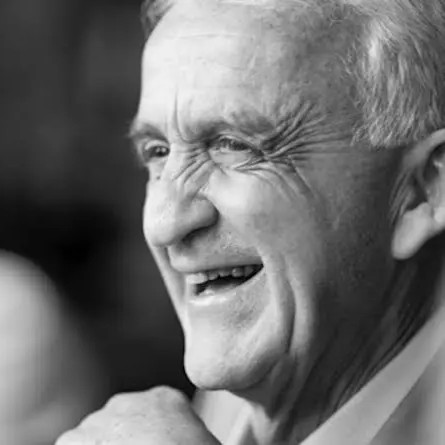
A few evenings ago, I had the privilege of hosting Peter Koenig for our sixth ReSource Session.
For more than four decades, Peter has been researching what he calls Source Principles – observing founders, family businesses, money, and human systems to understand why some initiatives flourish while others slowly lose their vitality. At the heart of his work lies a deceptively simple question:
Who is the true source of what is being created?
At first glance, it seems to be a question about organisations. However, as I sat in conversation with Peter, I found myself realising that it is, perhaps more profoundly, a question about ourselves.
Throughout our dialogue, there were moments that quietly challenged assumptions I didn’t even know I was carrying. Peter was never trying to persuade us. What struck me most was his remarkable ability to hold his perspective with deep conviction while remaining genuinely open to inquiry. There was no need to convince – only an invitation to look more carefully.
As the conversation unfolded, he offered us a new vocabulary – not merely new words, but new distinctions through which we could examine many of the concepts we have accepted unquestioningly for years. Words like Source, Hierarchy, Patriarchy, Responsibility, and Money were not simply redefined; they were reclaimed, inviting us to see them through an entirely different lens. Yet, amidst all these new distinctions, I found myself returning again and again to one deeply personal question:
Am I living from my Source?
As I hold it, the most important question isn’t simply, “Who is the source of this organisation?” It is whether we, as leaders and as human beings, are deeply connected to the source from which our own lives, choices, relationships, and leadership emerge.
Source
One of the questions I found myself asking Peter came from a place that felt deeply personal. If I were to say, “I am the source of this initiative,” doesn’t that carry a certain sense of ego? Doesn’t it subtly separate me from others? Doesn’t it move me away from humility?
His response surprised me. Peter spoke about ego in a way I had never quite considered before. Rather than treating the ego as something to transcend or suppress, he described it as the energy of manifestation. The force that allows an idea to become reality. The courage that takes the first step. The conviction to continue when no one else yet believes. The willingness to hold a vision long before it can be seen. Without that energy, nothing would ever be created.
As I listened, I realised that perhaps the question is not whether the ego is present. The deeper question is: What is the source of that ego? Is it arising from a need to prove, possess or control? Or is it arising from a profound willingness to serve what life is asking to come into being?
Perhaps this is where Peter’s distinction between Source and source became so meaningful for me. The Source with a capital S is that deeper intelligence, that quiet invitation from which creation emerges. The source with a small s is the person who hears that invitation and chooses to respond. Someone says yes. Someone takes responsibility for what has been entrusted to them. Someone is willing to hold a possibility before anyone else can yet see it. Not because they seek ownership, but because they have answered a call.
Leadership, in this understanding, is no longer about having authority over others. It is about becoming deeply responsible for what life has asked you to bring forth.
From that courageous “yes,” a field of possibility begins to emerge. Peter’s invitation to see how others come into that field truly touched me.
We often imagine that people join an organisation to help fulfil the founder’s vision. Peter offered a radically contrarian view that something far more life-giving is actually taking place. People recognise that this field offers them a place where something already alive within them can find expression.
Others enter that field, not to surrender their own vision, but because they recognise that their vision can flourish within it. Each person enriches the field through the uniqueness of what they bring. Each, in time, becomes the source of their own field of responsibility. It is a relationship of resonance, not dependence. It is a shared creation. A living ecosystem where individual purpose and collective purpose begin to nourish one another.
Once again, I found myself returning to the same question: Am I living from source? For me, this question has become less about discovering a purpose and more about cultivating a way of living. It begins by listening deeply enough to hear what life is asking of me. It asks for the courage to answer that call, often long before the path ahead is visible. It asks for the conviction to remain faithful to that calling through uncertainty, doubt, and the quiet seasons when nothing seems to be moving. It asks for the humility to recognise that what I am creating is not an expression of my ambition alone, but my response to something much larger that is seeking to emerge through me.
Hierarchy
Through much of my own journey Back to Source, I had arrived at a lived understanding that love sees no positionality. In love, there is no hierarchy. No one is above another. No one is beneath another. There is no greater or lesser, no identity that carries more inherent worth than another. As I began to experience that my essential nature is love, there was also a gentle dropping away of positionality itself. And with that came an allergy to and a rejection of the very idea of hierarchy.
This was also shaped by my own lived experience. Like many of us, I had encountered hierarchy expressed not as care, but as control; not as stewardship, but as domination. Whether in families, educational institutions, or organizations, hierarchy had too often been accompanied by “power over” The word itself had become difficult to separate from the experiences it represented.
So when Peter began speaking about hierarchy, I noticed an inner resistance arise again. My love for Peter invited me to stay open and I realised he wasn’t speaking about the hierarchy I had rejected. He was inviting us to rediscover what he called a sacred order. An order that does not emerge from status or superiority, but from responsibility.
The person who brings something into existence carries a responsibility that no one else can fully assume – not because they are more important, but because they alone stood at the moment of creation. From that Source, others naturally become stewards of their own fields, each carrying responsibility for what is theirs to hold. As he spoke, I found myself reflecting on how deeply this resonates with many of the traditions I had also experienced – Nature itself unfolds through an order; a seed becomes a tree. A teacher guides a student. A parent nurtures a child. None is greater than the other. Each simply carries a different responsibility within the unfolding of life.
The question I found myself returning to, again and again, was simply this: Am I living from Source? The insight that gradually emerged was that perhaps the question had never really been about hierarchy at all. It was about recognising that Source expresses itself in two complementary ways.
In our Being, Source reveals our essential nature. Here, love sees no positionality. There is no hierarchy. We are not more or less than one another. We simply are. However the moment Source begins to express itself through Doing – through creating, serving, leading, building, parenting, teaching, or nurturing life – it seems to require a sacred order. Not an order of status, but an order of responsibility. Each of us is called to hold something that no one else can hold in quite the same way.
Maybe this is the integration I had been searching for. Love dissolves positionality. Creation calls forth responsibility. Being reminds us of our oneness. Doing invites us to honour the unique stewardship that is ours.
I recognized that I am allergic to domination masquerading as hierarchy and Peter’s invitation was to reclaim a sacred order that allows love to express itself coherently in the world.
Money
Our conversation only briefly touched upon money – an irony, perhaps, considering that Peter’s life’s work began with a deep exploration of our relationship with money, long before it evolved into what we now know as Source Principles.
Yet even in those few moments, one distinction stayed with me. Money was never meant to be the destination. It is simply a means through which a vision finds expression. An enabler that supports what is seeking to emerge, rather than the reason for its existence.
So often, we allow money to become the measure of success, or the goal we spend our lives pursuing. Peter’s work gently reminds us that money finds its rightful place when it serves the unfolding of a vision rather than replacing it.
For me, this once again brought me back to the same reflection. Am I living from Source?
Living from source is not about pursuing money, nor is it about rejecting it. It is about remaining faithful to what life is asking of us to create, trusting that money is there to support the unfolding of that creation, not to define its worth. Perhaps money, then, is neither the destination nor the measure of success; it is simply another expression of a life lived in alignment with Source.
Patriarchy.
Towards the end of our conversation, Peter chose to step into one of the most contested words in our cultural vocabulary. Patriarchy.
What stayed with me wasn’t so much the word itself, but the trust with which he chose to bring it into the conversation.
Peter wasn’t inviting us to defend the distortions of patriarchy, nor to romanticise history. He was inviting us to ask a more subtle question. Have we become so focused on changing external systems that we have overlooked the inner work those systems are calling us to undertake?
I found myself leaning into Peter’s invitation to look beneath the distortion and reclaim the deeper qualities that every healthy system needs – responsibility, stewardship, protection, and the capacity to create enough safety for vulnerability to emerge. Perhaps this is not about patriarchy or matriarchy. Nor is it about one prevailing over the other. It is about integration.
About reclaiming the healthy masculine and the healthy feminine within each of us, allowing both to find their rightful expression. Structure with flow. Clarity with compassion. Boundaries with belonging. Leadership with love.
Living from Source asks us to move beyond polarity altogether. To recognise that lasting transformation is never born solely from changing the structures around us, but from integrating the qualities within us.
As I reflect on this conversation with Peter, I realise that what stayed with me were not simply new ideas, but an invitation to see again.
To re-examine what I had long rejected. To deepen my understanding of what I had long held close. And above all, to resist the temptation to normalise what we see in the world simply because we have become accustomed to it.
Perhaps this is the deeper invitation behind the vision of Soulful Organizations.
It is an invitation to cultivate the consciousness from which we create – to lead from a place of greater awareness, deeper responsibility, and a more wholehearted relationship with ourselves, one another, and life itself. It is through this inward journey that leaders begin to shape organisations differently, recognising that every organisation ultimately becomes an expression of the consciousness from which it is created.
Better structures, flatter hierarchies, stronger cultures, and more enlightened leadership models all have their place. Their deepest expression, however, emerges through leaders who have undertaken the inner work of returning to themselves.
For it is only when we stop normalising separation, domination, fear, and the relentless pursuit of success that we create the possibility of reconnecting with Source. And from that place, something profoundly different begins to emerge – organisations that are deeply human, leadership that is rooted in love, and a way of creating that remains deeply connected to Source.
As our consciousness evolves, so too does the way we create, collaborate, relate, and lead. Perhaps that is the real journey: becoming the human beings from whom Soulful Organizations can naturally emerge. For every journey towards a Soulful Organization is, ultimately, a journey… Back to Source.
source Principles: Rethinking Ownership, Leadership & Money
Overview
——————————-
Source Principles offer a different lens on leadership, ownership, and creation
Moving beyond conventional views of control, success, and hierarchy, into a deeper clarity of origin, decision-making, and the flow of money
Explore how leadership, power, and value begin to emerge more naturally when we are aligned with the source of what we are here to create
Source Principles: Rethinking Ownership, Leadership & Money – Peter Koenig
read more
Insights
Being Free
personal mastery Being FreeTucked away within the wild beauty of a National Park on the west coast of Portugal, near the quiet seaside town of Sesimbra, a group of us coaches, leaders, entrepreneurs, facilitators, seekers, and fellow travellers from across the world...

We Rise Together
personal mastery We Rise TogetherIn my study of the Bhagavad Gita, there are certain words that don’t just remain as ideas - they stay, they echo, they return at unexpected moments, almost as if they are waiting for life to reveal their deeper meaning. One such word...

Warrior Rooted in Love
soulful organisations Warrior Rooted in LoveTo be a blessing is the highest call of leadership This month, we hosted the fifth ReSource Session as part of our Soulful Organisations initiative. A conversation that has stayed with me, not just as an idea, but as a lived...

The Quiet Force of Evolution
soulful organisations The Quiet Force of EvolutionCultivating the Inner Ground as the New Paradigm of Leadership I first encountered Amy Elizabeth Fox through a podcast where she spoke about Love as a business imperative, and that phrase stayed with me. Not because it...

Spirit-Human-Spirit
personalß mastery The Spirit Behind the Human. The Human Behind the Spirit.As this year comes to a close, I find myself resting in a quieter, more honest reflection, one that feels less like a summing up and more like a remembering of what it truly means to walk a...

How I Show Up Matters
soulful organisations How I Show Up MattersA Reflection Inspired by the ReSource Series session with Alan Seale & Leon VanderPol At Back to Source, we created the ReSource Series as an offering of service and remembrance. It's our way to build awareness around...